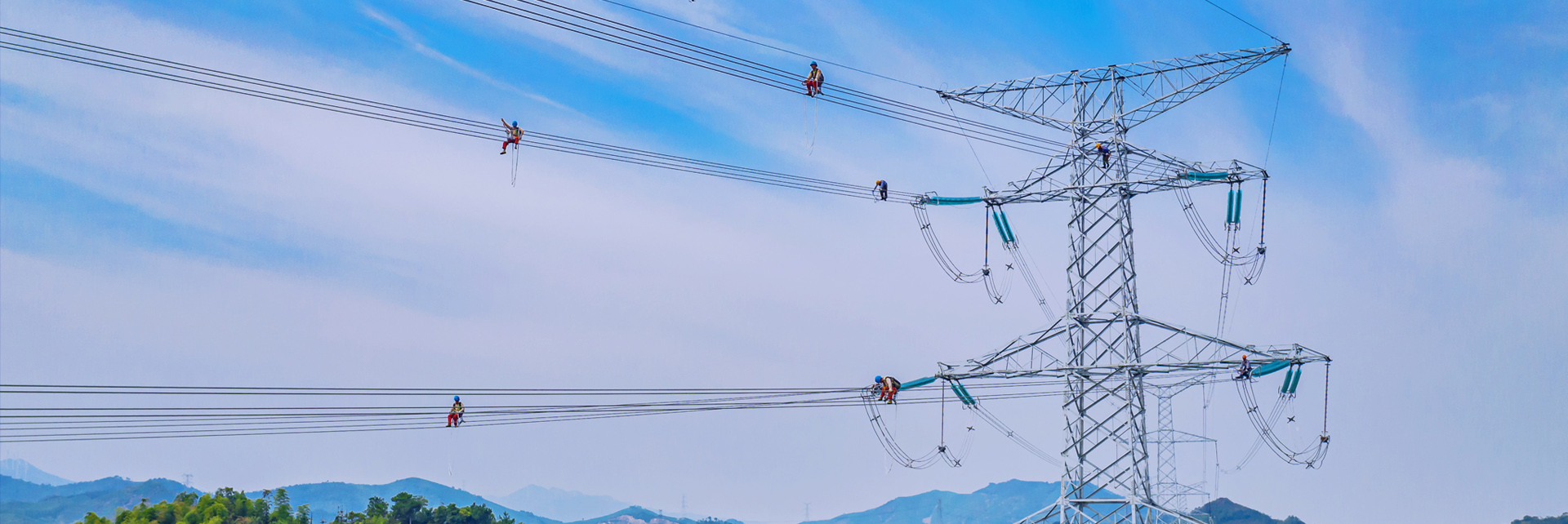
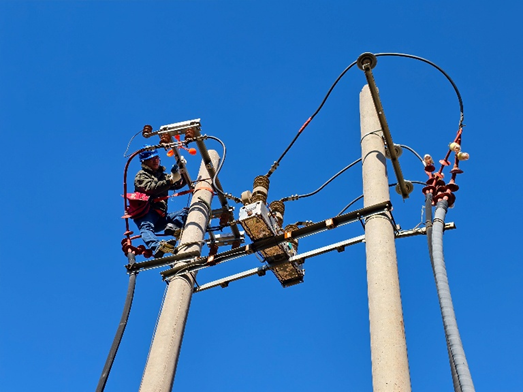
Windmill Bird Repellents leverage their core advantages of harnessing wind energy, requiring no external power supply, and operating continuously, making them an eco-friendly solution for bird control across diverse outdoor settings. Windmill Bird Repeller requires no external power source. It relies solely on natural wind to rotate its components, employing visual disruption and physical deterrence to encourage birds to stay away. This creates a zero-energy, low-maintenance barrier for various facilities.
The ZQN-GT-FL Windmill Bird Repeller from Zhenquniao Technology achieves bird deterrence through three key mechanisms.
The windmill-style bird repeller features a bowl-shaped reflector frame. Its core logic for achieving bird deterrence relies on harnessing natural wind power to drive mechanical movement. This creates dynamic visual and physical deterrents that disrupt birds' sense of environmental safety. The repeller operates through three primary mechanisms:
1. Bowl-shaped Reflector Frame: Boosts energy efficiency, enhances light output and visual impact.
The device's reflector frame breaks away from traditional flat-panel designs, adopting a customized bowl-shaped structure. This bowl shape effectively concentrates natural wind energy, achieving over 30% higher wind resistance utilization compared to conventional flat frames. When wind speeds reach ≥0.5 Beaufort, the bowl frame captures wind energy to drive full rotation, enabling lower wind speeds for activation. Simultaneously, the concentrated wind energy amplifies rotational power and speed. The dynamic light effects generated by high-frequency rotation more readily stimulate avian vision. Furthermore, the bowl-shaped frame uniformly distributes multi-faceted high-reflectivity lenses. Its 360-degree rotation capability achieves full coverage of reflection angles. Particularly at critical grid tower locations such as crossarms and insulators, the reflection creates sustained light effects.
2. Multidimensional interference between fan blades and reflectors disrupts potential adaptation.
The windmill-style bird deterrent's blades rotate in opposite directions to the reflector, creating multidimensional dynamic interference. The superimposition of these two counter-rotating dynamic elements generates asynchronous motion, preventing birds from adapting to a fixed rotational pattern.
3. 90-degree air deflector angle: Precise airflow control for stable operation
The three wind bowls (core components driving the reflector frame rotation) feature a 90-degree standard angle design. This maximizes wind energy capture at low wind speeds, preventing wind loss from overly large angles or insufficient wind resistance from overly small angles. In 0.5-1 m/s breezes, the 90-degree wind bowl rapidly accumulates wind power to drive stable reflector frame rotation, ensuring uninterrupted light output. When facing high winds, the 90-degree bowl also rapidly accumulates wind power to drive the reflector frame's stable rotation. In light winds of 0.5-1 Beaufort scale, the 90-degree wind cups rapidly accumulate wind force to drive stable rotation of the reflector frame, ensuring uninterrupted light efficiency. During high winds, the structural characteristics of the 90-degree wind cups act as a "wind resistance buffer," preventing excessive rotational speed from causing mechanical wear due to strong winds while safeguarding the device from damage.